Our programme begins by assessing learning needs of each student. EDeQUAL’s online diagnostic assessments determine with accuracy the student’s Math level and topic proficiency. A Student Competency Profile is developed using these assessment data which is updated quarterly as the student progresses through the EDeQUAL Method. A thorough assessment process may take up to three sessions.

The ATLA Method

Based on the assessment data, a goal-setting meeting is held with the student/parents to set concrete learning goals over a specified period (usually 3 months). EDeQUAL may propose a learning path based on the results of the diagnostic assessment. If significant learning gaps are identified it may be necessary to fill these gaps before attempting to track the student’s class level. Students and parents may also have their own preferences, such as tracking class progression or test preparation. After discussion, precise learning goals are agreed over three months. These are documented in the student’s Learning Plan and guide what the student will do over this period. The Learning Plan is regularly monitored to ensure that the student is on track.
Students use EDeQUAL’s online learning materials, guided by a trained teacher. They attend EDeQUAL’s Learning Centre for 2, 3 or more one-hour long guided sessions per week. During the first month the student becomes familiar with our learning platform (MyEDeQUAL), how to use the instructional material, and gets one-to-one teacher support. An important objective during this first month is for the student to become a more independent learner. The teacher engages the student to take ownership of their learning. Once they become sufficiently independent, students are encouraged to also use EDeQUAL at home. Regular student-teacher check-in points ensure that progress towards learning goals is on track, and any adjustments that may be required are made to the Learning Plan.
Student performance is closely measured, with both quantitative and qualitative assessments. The EDeQUAL Mastery Assessments provide an objective report of learning outcomes, while teacher observation and engagement with the student provides a wider perspective on learning achievements and needs. EDeQUAL provides monthly reports on student progress. A quarterly goals review session is organized with students/parents, where detailed feedback is provided on student progress against learning goals and new learning goals are agreed for the next quarter.
Why EDeQUAL
Students who perform poorly in Math do so not because they are unable to understand it, but because teaching methods are not well suited to their needs. Because it is a foundational subject, students who are weak at Math tend to perform below their potential in other subjects also.

At EDeQUAL we want every student to become great at Math. To achieve this, students require deep learning of concepts, which involves understanding, applying, analysing and evaluating using Math. Our solution is completely individualised to each student’s requirement. We provide the best quality online instructional material carefully organised by course level and topic, and a teacher-guided learning framework that helps students to progress through their learning path. We continuously test student progress to ensure that learning objectives are met and we maintain a mix of constant challenge and regular achievement to build student motivation.
The Blended Learning Approach
We use the internationally recognized “blended learning” method that combines teacher-supported and online instruction. At EDeQUAL, we build a strong student-teacher framework that enhances the learning experience. We use the best available online instructional material – short videos, interactive exercises, and assessments – carefully organised by topic and learning objective. And we provide comprehensive assessments to ensure that students master topics before moving on. Our approach empowers students by boosting their confidence and making them more independent-learners.
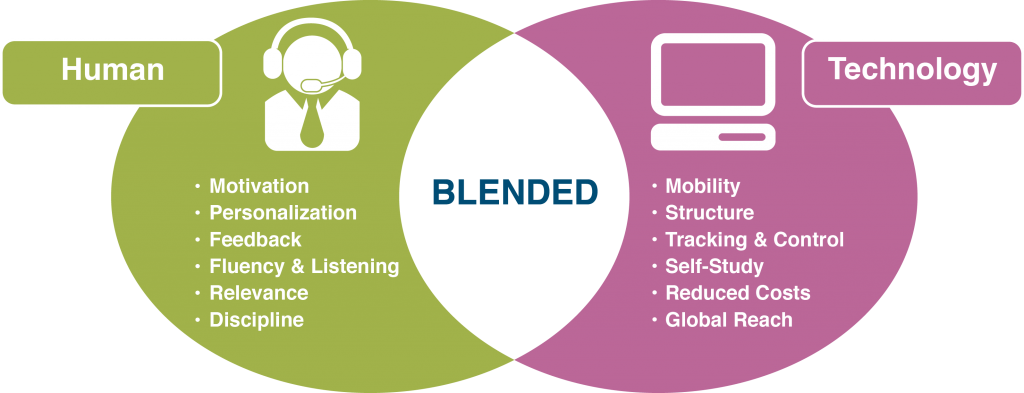
Blended learning combines online learning methods with a teacher-guided learning environment. This method has proved to be very successful for K-12 (primary and secondary school) students. A recent study of 25,000 students in 147 US schools found an eight percentile improvement in learning outcomes in Math of students who used blended learning compared to traditional methods (RAND Corporation Research Brief, 2013). In other words, blended learning can take a failing student to the level of an average student or an average student to a good student. Similarly, the Silicon Valley-based Christensen Institute for Disruptive Innovation recently cited results from a different set of US schools: “In the 2013-14 school year, across nine districts and over 5,000 students, the students in blended-learning classrooms outperformed those in the non-blended classrooms.” Rapid adoption of blended learning is underway, such that “by the end of the decade, most U.S. schools will fully incorporate instructional technology into their structures and schedules,” according to the US-based Foundation for Excellence in Education.